
Views: 0 Author: Site Editor Publish Time: 2025-09-16 Origin: Site


Disperse dyes are the foundation of polyester coloration, offering unmatched brilliance and durability on this hydrophobic fiber. Unlike other dye classes, they penetrate deep into synthetic fabrics, creating shades that resist fading and maintain vibrancy through wear and washing. Shaoxing Shangyu Haohua Chemical Industrial Co., Ltd. has engineered disperse dyes specifically for polyester, ensuring high reproducibility, consistent leveling, and suitability for exhaust, continuous, and printing applications. This article explores how disperse dyes work, why they matter for polyester, and how high light fastness disperse dyes make them indispensable for demanding end uses.
Disperse dyes are non-ionic, organic compounds with low water solubility. They exist in the dye bath as finely dispersed particles that remain suspended and are able to migrate into polyester fibers under heat and pressure. Because polyester lacks reactive sites, these dyes rely on sublimation and diffusion to enter the fiber’s amorphous regions. Once inside, they are locked in by van der Waals forces and hydrophobic interactions, giving stable color.
Fine dispersion ensures even penetration.
Small particle size allows deep diffusion into polyester.
Hydrophobic affinity creates durable bonding.
This unique behavior explains why disperse dyes remain the only practical choice for polyester. While other dye classes show poor affinity, disperse dyes achieve reliable fixation with low environmental residue, aligning with modern production demands.
Reactive dyes chemically bond to natural fibers like cotton, while pigment dyes sit on the surface with a binder. Neither method is efficient on polyester. Disperse dyes, by contrast, were designed for synthetics. They combine strong color yield with resistance to washing and abrasion, making them the dye of choice for polyester yarns, fabrics, and blended textiles. Their advantages are clear in industries where polyester blends dominate, from fashion to technical textiles.
In exhaust dyeing, polyester fabrics are immersed in a dye bath with dispersed particles. At high temperatures (typically 130°C under pressure), the fiber swells slightly, allowing dye molecules to diffuse inside. Carriers or auxiliaries may be added to enhance uptake. Once cooled, the dye is fixed in place, producing level and reproducible shades.
This method suits yarn dyeing and piece dyeing where shade depth and penetration are priorities. When combined with well-controlled auxiliaries, it provides consistent results with minimal re-dyeing requirements.
For industrial-scale operations, continuous dyeing offers efficiency. The thermosol process involves padding the fabric with disperse dye, then pre-drying and subjecting it to high-temperature fixation (180–220°C).
Typical steps include:
Pad fabric with dye dispersion.
Pre-dry to remove moisture.
Thermosol fixation at controlled temperature and time.
Final soaping and rinsing to remove surface residues.
This method achieves excellent penetration with minimal staining, suitable for large volumes and technical fabrics. Its ability to handle wide-width fabrics quickly makes it essential for mills that prioritize output efficiency.
Disperse dyes also excel in printing. Heat transfer printing, where designs are first printed on transfer paper and then sublimated into fabric under heat and pressure, is widely used for sportswear and fashion. Digital inkjet with disperse inks further expands creative possibilities, enabling precise patterns and reduced water consumption. As sustainability gains importance, the reduced water load of transfer printing positions disperse dyes as a future-ready solution.
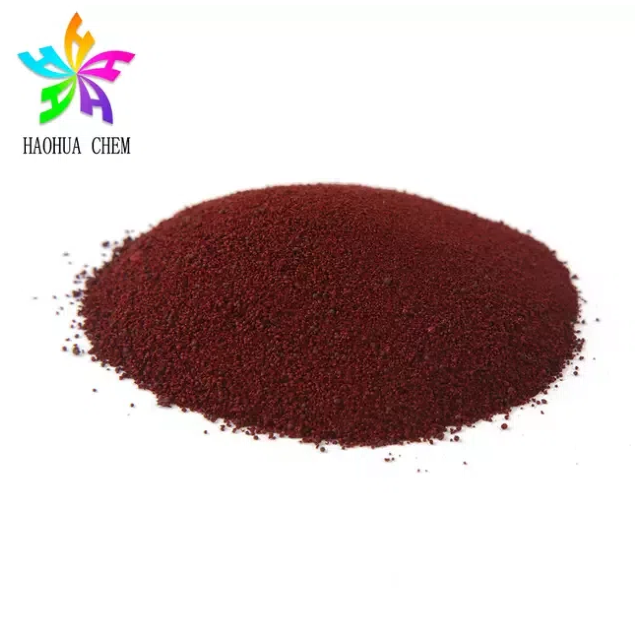
Not all disperse dyes behave the same. Molecular structure influences brightness, depth, and resistance. Brighter shades often require smaller molecules that diffuse quickly, while deeper shades may rely on larger molecules with slower penetration. Careful selection ensures balance between brilliance and durability.
High light fastness disperse dyes are crucial when fabrics face strong sunlight, such as in outdoor textiles or automotive upholstery. Light fastness is measured on the ISO or AATCC scales, usually from 1 (poor) to 8 (excellent). Fabrics intended for curtains, car seats, or technical gear demand ratings of 6 or above to avoid fading. This test data guides mills in matching dye performance to product application.
Even the best dye can underperform if process conditions are mismanaged. Critical parameters include:
Temperature: too low reduces diffusion, too high risks migration.
Time: sufficient dwell ensures penetration.
Carriers: improve dye mobility but must be carefully dosed.
Fixing method: pad–dry–thermosol differs from exhaust dyeing in uptake.
For mills, process discipline translates into fewer shade variations and higher reproducibility — both essential for export-quality textiles.
High-exhaust disperse dyes are ideal for standard polyester dyeing at elevated temperatures, delivering strong penetration and reproducibility. Low-temperature dyes, often aided by carriers, are better suited to polyester blends where sensitive fibers may not tolerate high heat. The choice depends on fiber type, machinery, and energy constraints.
In mass production, reproducibility is critical. A high-quality disperse dye offers consistent shade across batches, minimal staining of adjacent fibers, and excellent leveling. This reduces waste and ensures smooth supply for apparel or technical textiles. Many mills rely on disperse dyes precisely because of their predictable performance during scale-up.
Laboratory-scale tests safeguard production. Recommended checks include:
Exhaustion and fixation yield.
Shade reproducibility under set conditions.
Fastness ratings (washing, rubbing, light).
Compatibility with auxiliaries and carriers.
When these tests are carefully documented, they provide a valuable database for repeat orders, ensuring faster response to customer demands.
Polyester dominates activewear, fast fashion, and blends. Disperse dyes deliver vibrant hues, soft handle, and drape-friendly results. Their wide shade range supports ever-changing fashion demands. Consumers value garments that retain color after repeated laundering, and disperse dyes ensure this performance.
Curtains, upholstery, and industrial fabrics benefit from disperse dye’s depth and wash resistance. Their non-bleeding nature makes them suitable for heavy-duty and decorative textiles alike. In hospitality and contract textiles, the combination of durability and brilliance is particularly valued.
For automotive interiors, outdoor gear, and sun-exposed technical textiles, high light fastness disperse dyes are indispensable. Their ability to resist fading ensures performance and aesthetics throughout the product lifecycle. This has made them the standard in sectors where safety, longevity, and aesthetics converge.
Uneven shades or edge migration often trace back to inadequate temperature control or uneven padding. Adjusting dwell time, liquor ratio, and fabric handling minimizes such issues. Careful attention to drying before thermosol fixation can also reduce edge-to-center variation.
Post-dye washing is essential. Proper soaping removes unfixed dye from the fabric surface, preventing staining during customer use. Using optimized detergents at the right temperature ensures maximum fastness without damaging the fiber.
Simple lab checks — such as rubbing tests, light exposure samples, and levelness evaluation — help mills identify and correct problems before scaling up. A disciplined lab-to-production protocol ensures that even small variations are detected early, saving cost and time in large runs.
Disperse dyes are the proven solution for polyester, offering vivid, long-lasting color that withstands both wear and exposure. By understanding their mechanisms and selecting high light fastness disperse dyes for demanding applications, textile producers can ensure consistent quality across apparel, home, and industrial textiles. Shaoxing Shangyu Haohua Chemical Industrial Co., Ltd. provides a full range of disperse dyes engineered for polyester, delivering reproducibility, brilliance, and excellent leveling across exhaust, continuous, and printing methods. Contact us today to explore our disperse dye collection and enhance your production performance.


